If you run a Shopify store in 2026, you are not just competing on Google anymore.
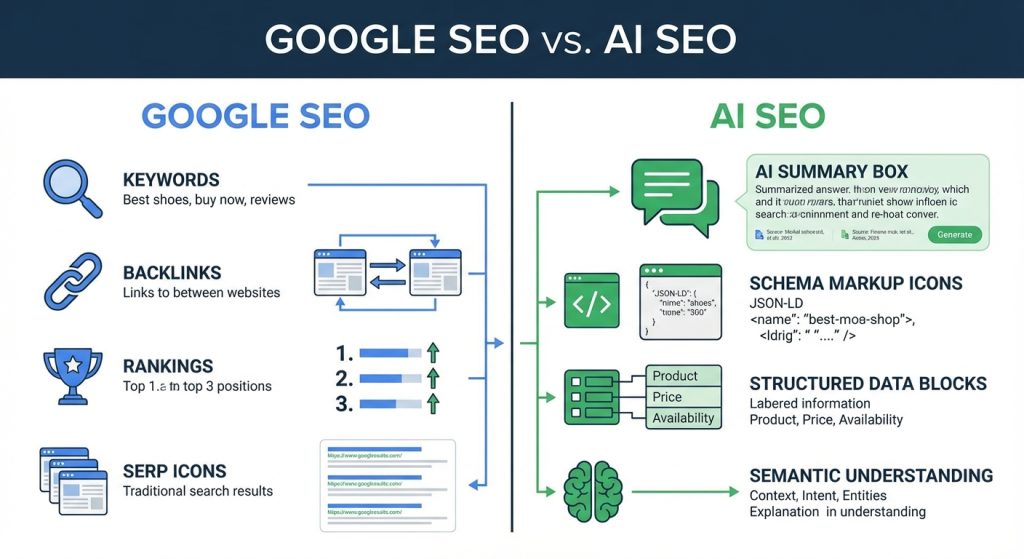
You are competing inside:
- Google Search
- Google AI Overviews
- ChatGPT
- Gemini
- Perplexity
- Voice assistants
- Shopping carousels
And here is the reality:
AI Overviews now appear in roughly 40%+ of informational searches, and zero-click behavior is increasing. That means users often get answers without visiting your site.
If your store is optimized only for traditional Google SEO, you are missing half the game.
This guide breaks down:
- What Google SEO really means today
- What AI SEO actually is
- The core differences
- Shopify-specific implementation steps
- How to build topical authority that works in both systems
No hype. Just fundamentals that win long term.
What Is Google SEO?
Google SEO (traditional SEO) is about helping Google:
- Crawl your pages
- Understand your content
- Rank you for relevant keywords
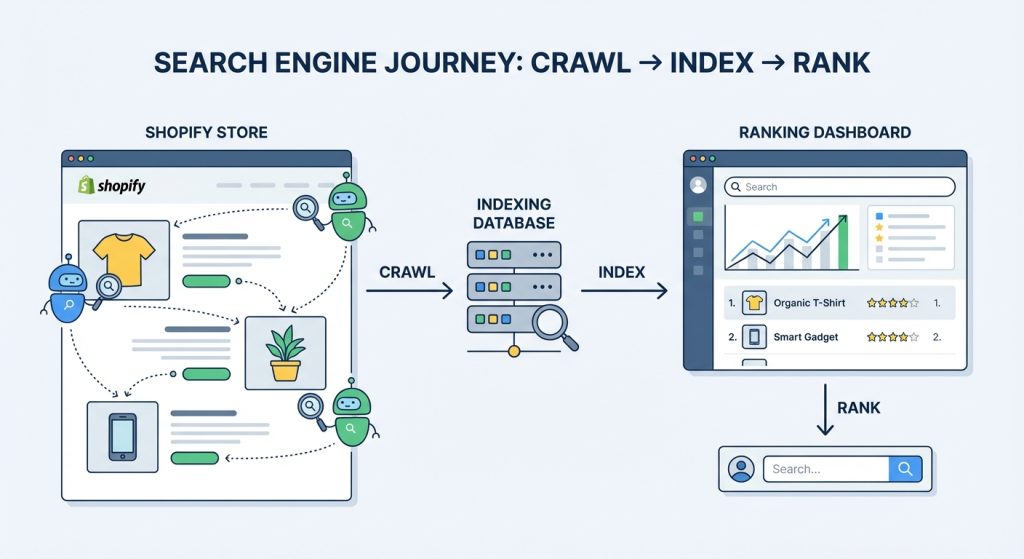
It relies heavily on:
- Keywords
- Backlinks
- Technical structure
- Content depth
- EEAT (Experience, Expertise, Authoritativeness, Trustworthiness)
For Shopify stores, this typically means:
- Optimizing product titles and descriptions
- Fixing duplicate collection URLs
- Improving Core Web Vitals
- Building blog clusters
- Earning backlinks
Google SEO is ranking-based.
If you rank position #1, you get traffic.
Simple.
But AI search is different.
What Is AI SEO?
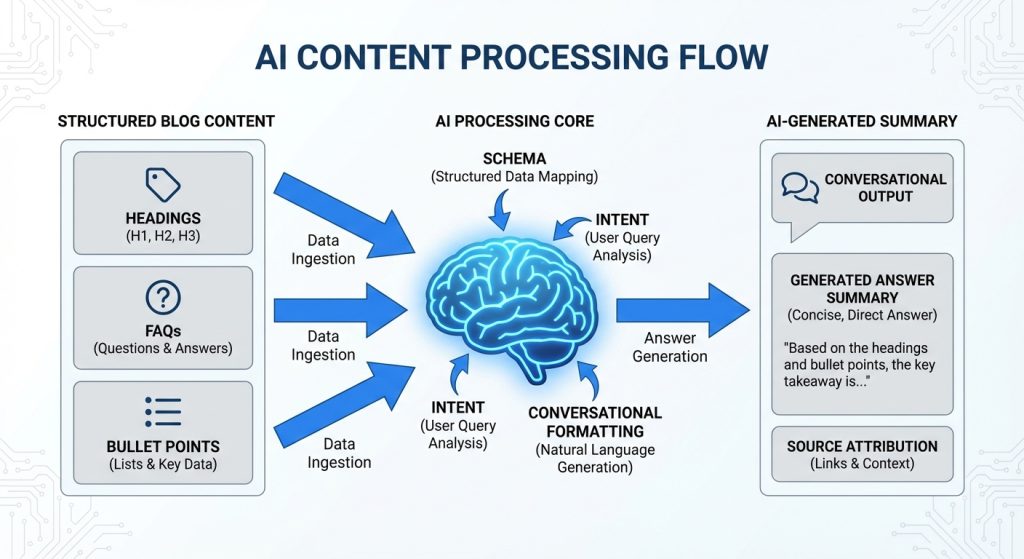
AI SEO is optimization for generative engines.
Instead of ranking a list of links, AI systems:
- Summarize answers
- Extract product data
- Generate comparisons
- Pull structured information
- Cite authoritative sources
AI SEO focuses on:
- Intent-driven content
- Structured data (schema)
- Conversational formatting
- Question-based headings
- Clear product signals (price, stock, reviews)
It is citation-based, not just ranking-based.
You may not be “#1”.
But your store might be referenced inside an AI answer.
That is visibility.
Core Differences: Google SEO vs AI SEO
Here is a clear breakdown Shopify owners should understand:
| Aspect | Google SEO | AI SEO | Shopify Action |
|---|---|---|---|
| Content | Keyword-focused | Intent-focused | Add FAQs + buyer questions |
| Structure | Titles, H1, internal links | Schema, structured formatting | Implement Product + FAQ schema |
| Visibility | Blue links | AI summaries + citations | Optimize for answer extraction |
| Keywords | High-volume | Commercial + long-tail | Target buying queries |
| Authority | Backlinks | Topical clarity + data trust | Build content clusters |
Both matter.
But they reward different signals.
Why Shopify Stores Must Blend Both
If you optimize only for Google rankings:
- You risk zero-click loss
- AI might summarize competitors instead
- Your products may not appear in AI answers
If you optimize only for AI:
- You lose traditional organic traffic
- You ignore backlinks and authority
- You weaken your long-term domain power
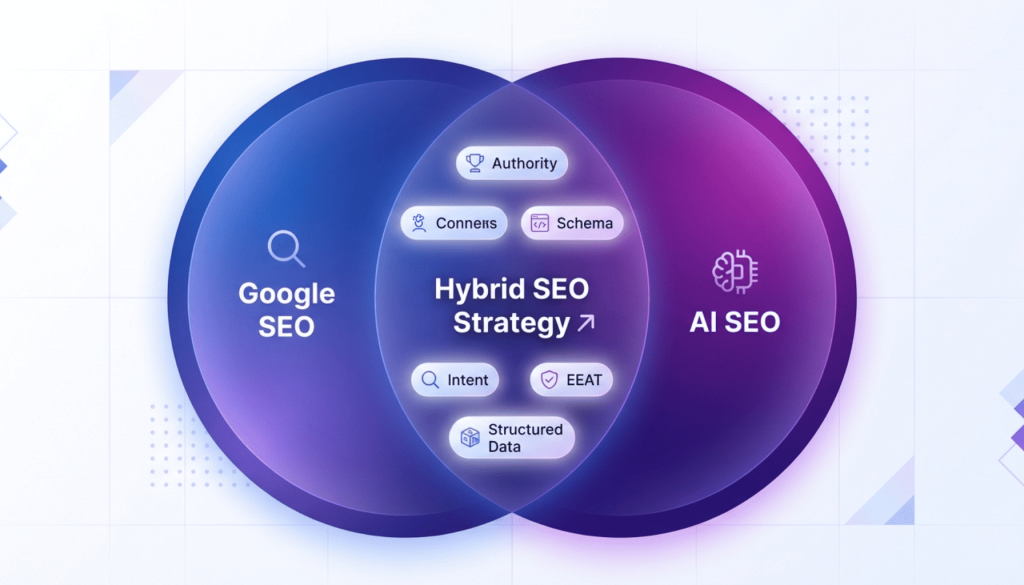
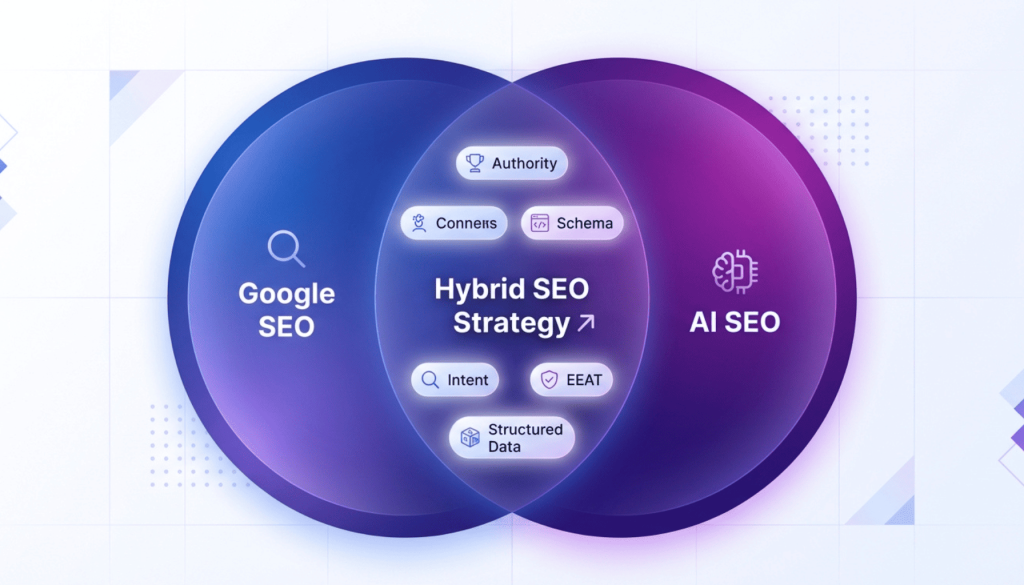
The winning strategy is hybrid SEO.
Google SEO Fundamentals for Shopify (That Still Matter)
Let’s ground this properly.
Before chasing AI trends, Shopify owners must fix basics.
1. Keyword Research Still Drives Revenue
You must target:
- Product-intent keywords
- Collection-level keywords
- Problem-based blog keywords
Example:
Instead of targeting:
- “how to clean grout”
Target:
- “best grout stain remover for bathroom tiles”
Commercial queries convert better and are favored in shopping results.
2. On-Page Optimization Basics
For product pages:
- Title under 60 characters
- Clear meta description
- Structured H1
- Internal links to related collections
- Image alt text
For collections:
- 150–300 words of optimized intro copy
- FAQ section below product grid
These signals still matter heavily for Google crawling and indexing.
3. Technical SEO Cannot Be Ignored
Shopify stores often suffer from:
- Duplicate collection URLs
- Poor canonicals
- Slow mobile load times
- App script bloat
Fix:
- Remove duplicate URL structures
- Improve Core Web Vitals
- Compress images
- Remove unused apps
Speed affects both Google SEO and AI visibility.
4. EEAT Builds Long-Term Trust
Google rewards:
- Author bios
- Clear brand identity
- Real customer reviews
- Policy transparency
- Clear contact information
AI systems also prefer structured, trustworthy sources.
Authority is not optional anymore.
The AI SEO Shift: What Changed?
AI does not just match keywords.
It understands intent.
That changes how you structure content.
1. Intent Over Keywords
AI engines look for:
- Clear answers
- Direct statements
- Structured explanations
- Bullet points
- FAQs
Instead of writing:
“Grout stain remover is an effective cleaning product used…”
Write:
What Is the Best Grout Stain Remover for Bathroom Tiles?
The best grout stain remover for bathroom tiles should:
- Remove mold and mildew
- Be safe for ceramic surfaces
- Work on white and colored grout
- Offer fast-acting formula
That structure increases AI extractability.
2. Schema Is Now Critical
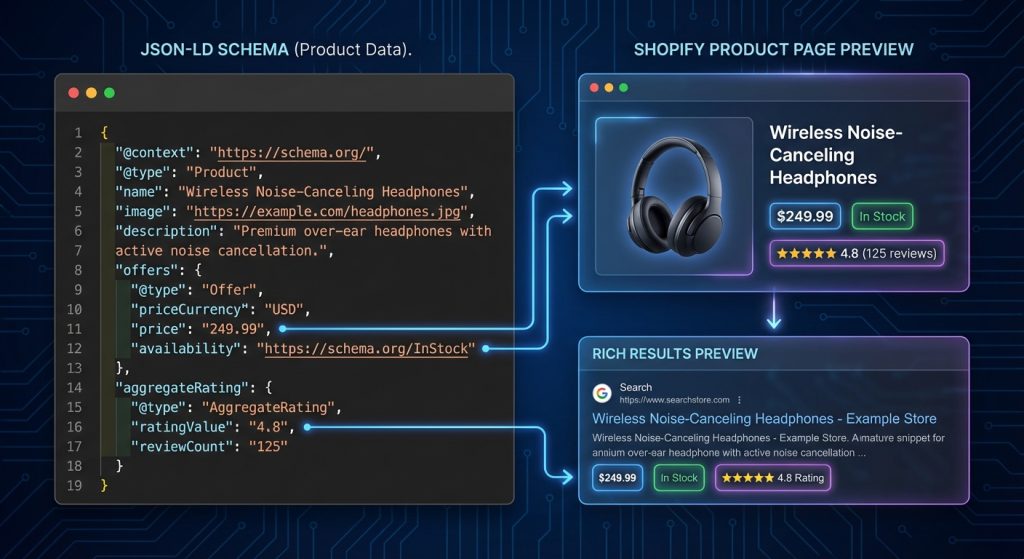
Structured data helps AI systems understand:
- Product name
- Price
- Availability
- Reviews
- FAQs
Essential schema types for Shopify:
- Product
- FAQPage
- CollectionPage
- Organization
- BreadcrumbList
Without schema, AI may ignore your product details.
3. Formatting Impacts AI Visibility
AI prefers:
- Question-based headings
- Short paragraphs
- Lists
- Tables
- Clear definitions
This is not about gaming AI.
It is about making content machine-readable.
Shopify-Specific AI SEO Tactics
Let’s make this actionable.
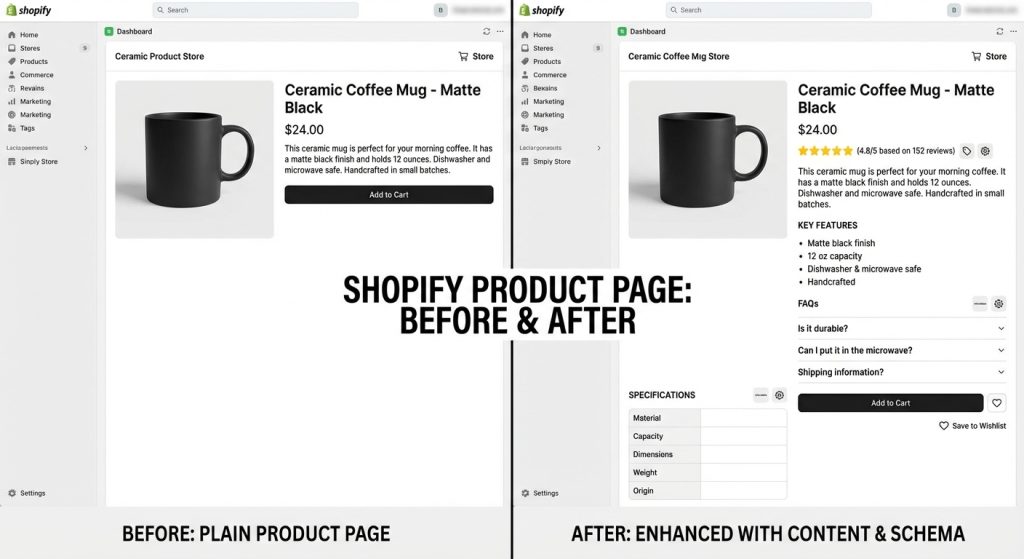
1. Upgrade Product Pages
Add:
- FAQ section under product description
- Comparison table
- Shipping + returns summary
- Structured product specs
Use metafields to split:
- Short description
- Feature bullets
- Technical specs
- FAQ block
This improves both Google and AI extraction.
2. Optimize Collections for Intent
Instead of a thin collection page:
Add:
- Buying guide intro
- “Who is this for?” section
- 3–5 FAQs
- Internal links to related blogs
AI Overviews often pull from structured collection intros.
3. Target Commercial Long-Tail Queries
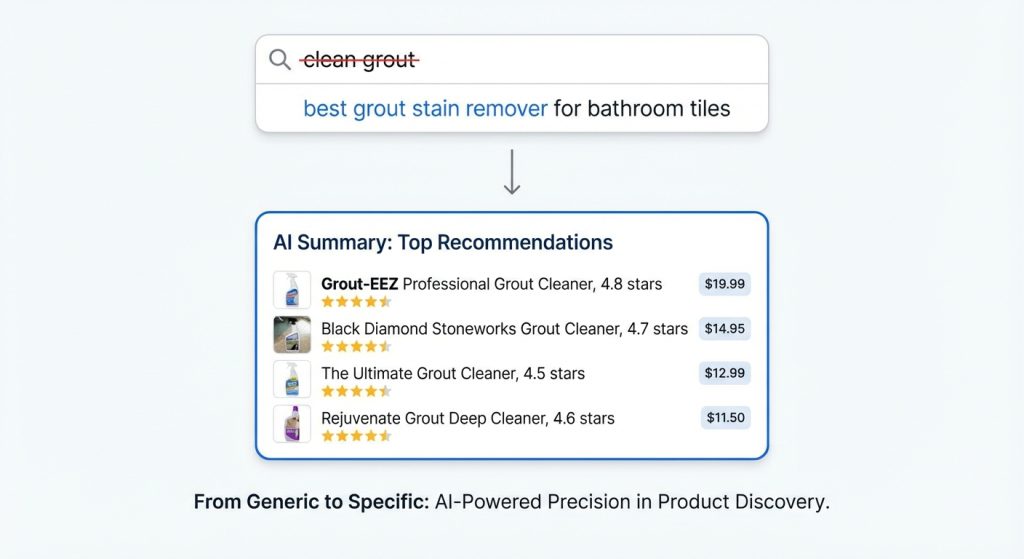
AI often prefers:
- Specific buying queries
- Problem-to-solution content
- Comparison-based content
Examples:
- “best organic baby soap for eczema”
- “sulfate-free shampoo for colored hair”
- “waterproof hiking backpack under 100 dollars”
These convert better and get cited more often.
4. Use Merchant Center Properly
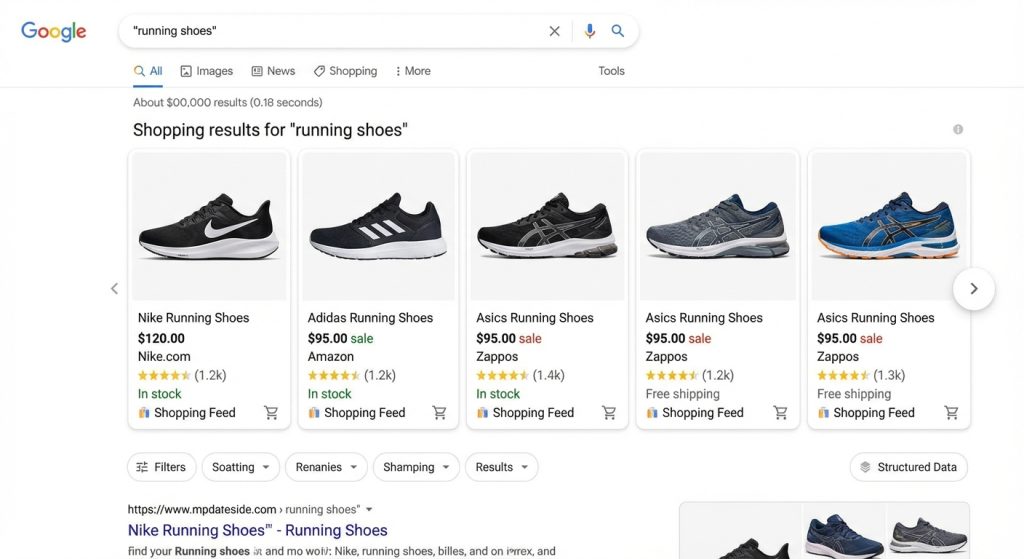
Free product listings help:
- Shopping carousels
- AI product summaries
- Commercial queries
Ensure:
- Correct GTIN
- Accurate pricing
- Stock updates
- High-quality images
Product clarity improves AI confidence.
Implementation Guide for Shopify Owners
Here is a simple phased approach.
Week 1: Audit Fundamentals
- Fix duplicate URLs
- Improve mobile speed
- Remove unused apps
- Add canonical tags
Use tools like:
- PageSpeed Insights
- Microsoft Clarity
- Shopify analytics
Week 2: Add Structured Data
Implement:
- Product schema
- FAQ schema
- Collection schema
Use a Shopify app or custom JSON-LD injection.
Verify in Rich Results Test.
Week 3: Upgrade Content for AI
- Convert headings into questions
- Add bullet lists
- Add structured FAQs
- Update old blog posts
Focus on buyer intent.
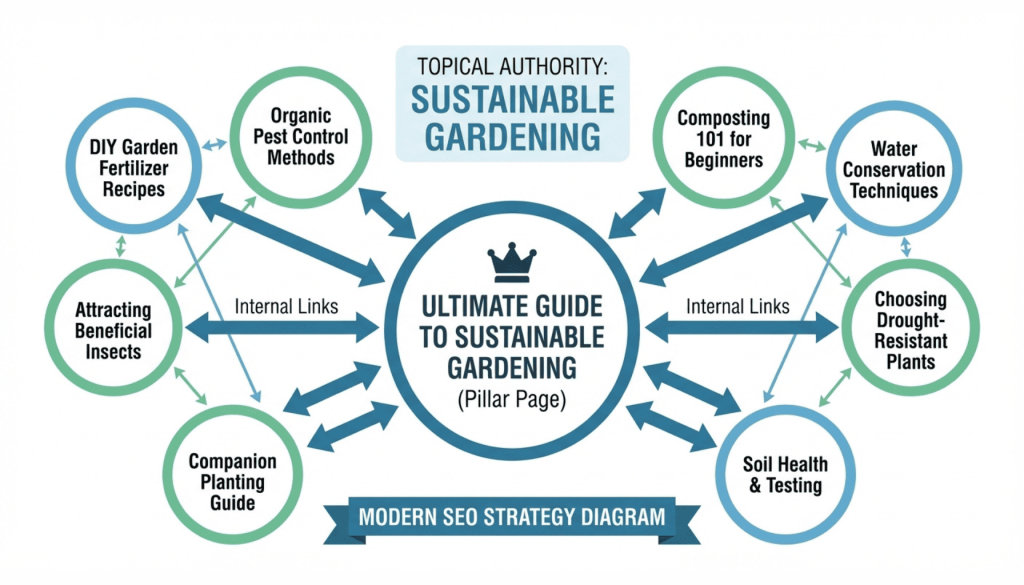
Week 4: Build Topical Authority
Instead of random blogs, build clusters.
Example cluster:
Main pillar:
- “Complete Guide to Grout Cleaning”
Supporting:
- Best grout cleaner for bathrooms
- How to remove black mold from grout
- Tile cleaning mistakes
- Grout sealing guide
Interlink everything.
Topical authority increases both rankings and AI citations.
Tracking Google SEO vs AI SEO
Google SEO Metrics:
- Organic impressions
- Click-through rate
- Keyword rankings
- Core Web Vitals
AI SEO Signals:
- Appearance in AI Overviews
- Being cited in generative responses
- Merchant Center product exposure
- Brand searches increasing
Brand visibility becomes more important than raw clicks.
Future-Proofing: Search Is Now Everywhere
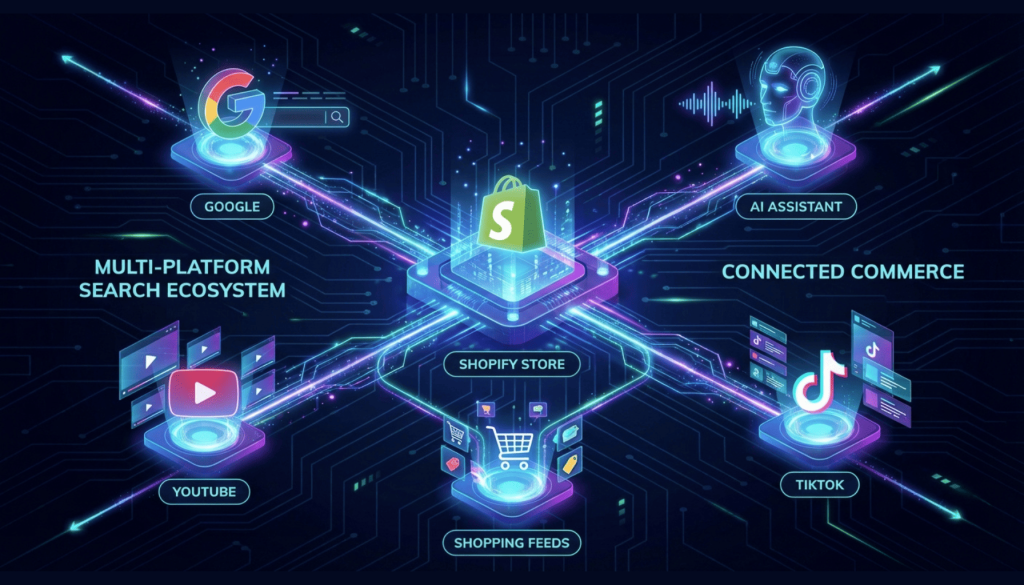
SEO is no longer just Google.
Your products can surface through:
- YouTube
- TikTok
- AI assistants
- Shopping feeds
Hybrid search visibility wins.
Do not over-optimize for AI-generated content alone.
Human clarity still converts.
AI visibility brings traffic.
Human trust closes sales.
Final Breakdown: What Shopify Owners Must Understand
Google SEO builds ranking power.
AI SEO builds extractable authority.
Google rewards:
- Links
- Speed
- Keywords
- EEAT
AI rewards:
- Structure
- Intent clarity
- Schema
- Conversational formatting
The future is hybrid.
Stores that blend both will:
- Survive zero-click trends
- Appear in AI summaries
- Maintain organic traffic
- Build stronger brand demand
Conclusion
If you are running a Shopify store in 2026, this is not optional anymore.
Traditional SEO alone is not enough.
AI-only content is not enough.
The winning formula is:
Strong fundamentals + structured clarity + intent-driven content.
That is how you build authority in both search engines and answer engines.
If you want to see where your store stands across Google SEO and AI SEO, run a structured audit and identify:
- Technical gaps
- Schema gaps
- Intent gaps
- Extractability gaps
Hybrid SEO is not the future.
It is the present.