
Your Guide to Tools That Reveal If AI Sees You
If your Shopify store ranks #1 on Google yet gets zero visibility inside ChatGPT, Gemini, and Perplexity you’re not alone.
In 2026, 64% of online shoppers report using AI tools to discover and buy products, yet an overwhelming number of Shopify stores remain invisible to the very systems where people are now asking “What should I buy?” instead of “What should I Google?”
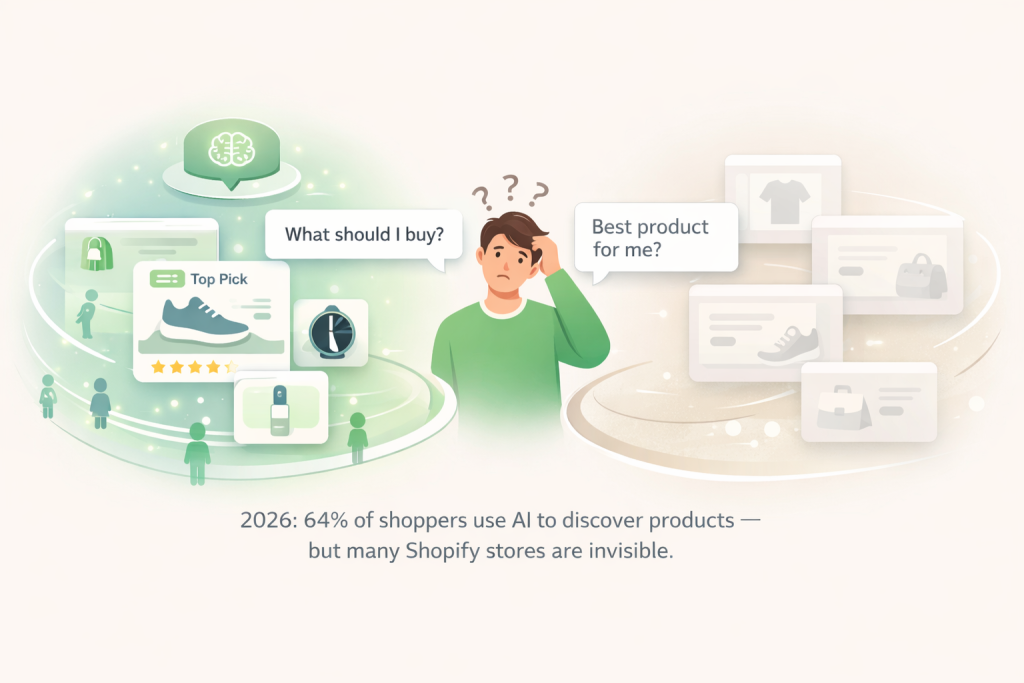
With traditional SEO no longer enough to capture every discovery touchpoint, businesses and creators need AI visibility checkers that reveal where you are seen and where you aren’t in the rapidly evolving AI search landscape.
What Is an AI Search Visibility Checker?
When someone asks an AI assistant, “What’s the best X?” or “Which store should I buy from?”, the AI pulls from tons of sources and gives one neat answer. AI search visibility is simply how often and how prominently your brand shows up inside those AI-generated answers.
Instead of tracking blue links alone, these tools answer questions like:
- Does ChatGPT mention my brand for key search prompts?
- Is my content cited in AI summaries or answers?
- Which AI platforms reference my domain and how often?
They measure presence, position, citations, and even share of voice inside generative AI results.
Top AI Search Visibility Checkers for 2026
Below is a curated list of the best AI visibility checkers today – structured from free and entry‑level to enterprise and advanced solutions.
1. Fixmystore.com
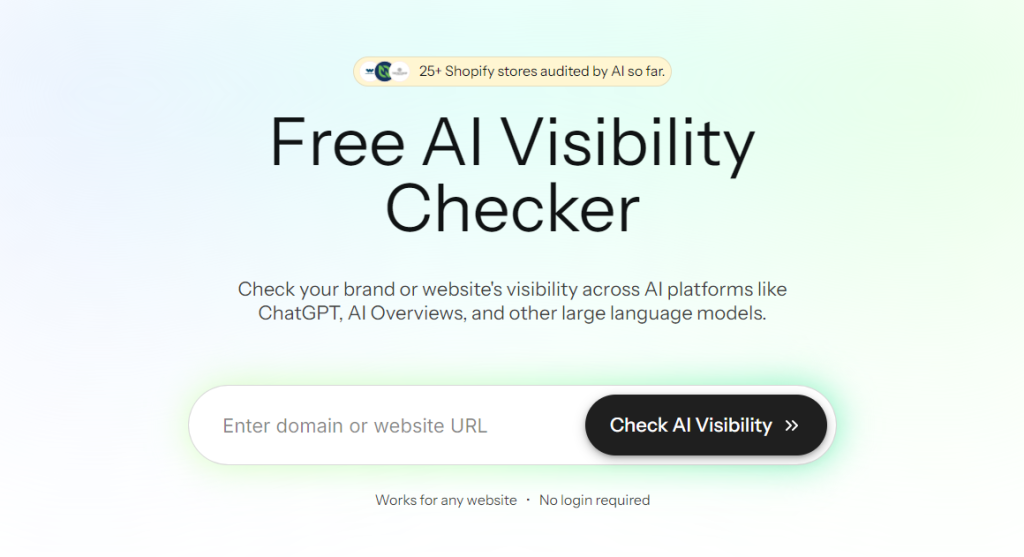
Best For: Shopify stores, solo brands, ecommerce teams (0–5 people)
Price: Free
AI Engines Covered: ChatGPT, Gemini, Perplexity, Copilot
Why It’s #1 in 2026:
- Free audit with no credit card or signup required
- Purpose: built for Shopify stores and small ecommerce teams
- Fastest time to value: get results in under 5 minutes
- Measures presence, position, sentiment, and competitors
- Includes 30 days visibility improvement plan for beginners
- Emphasizes product data optimization not just content or keywords
Fixmystore is the only tool focused on making AI search visibility accessible to solo operators, not just agencies or enterprises. It’s also the first to build visibility insights around structured product data, which AI systems rely on heavily.
Start free Now: Fixmystore.com
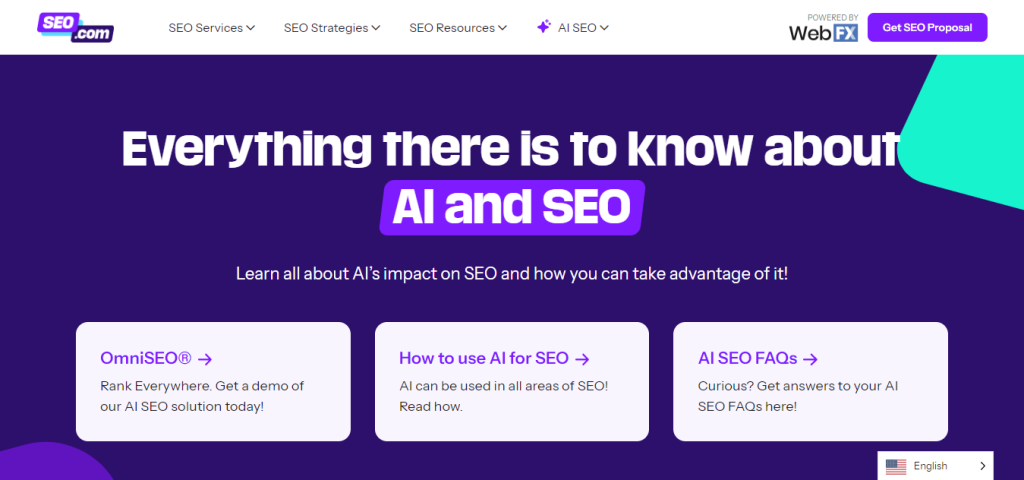
2. SEO.com
Best for: Beginners, quick checks, proof of concept
Price: Free
This zero‑cost tool shows whether a given keyword triggers a Google AI Overview and if your site appears in it. It’s a fast way to validate AI visibility for a specific query without setup, subscriptions, or onboarding.
Why it’s useful:
- Instant visibility snapshot
- Great for early hypothesis testing
- No account required
Limitations:
- Covers only Google AI Overviews
- No historical tracking or dashboards
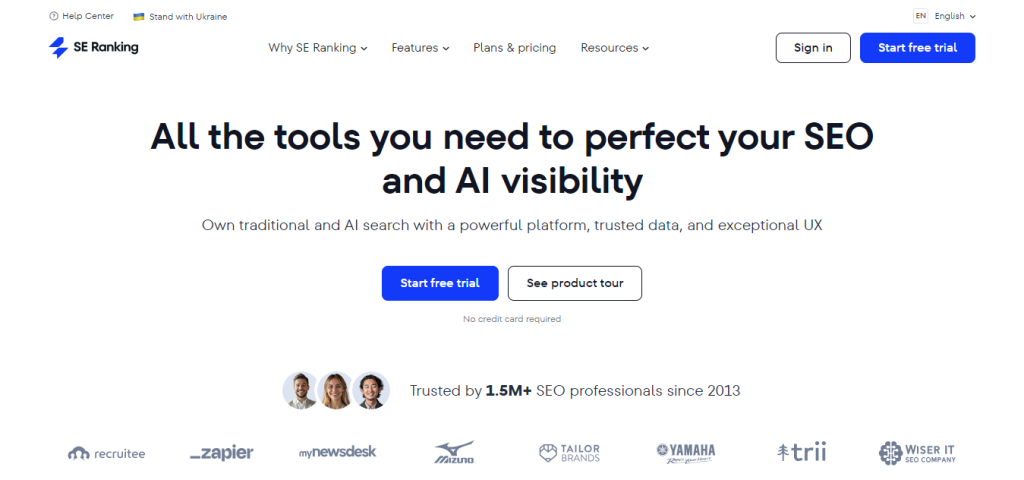
3. SE Ranking
Best for: SEO teams wanting integrated AI visibility tracking
Price: From ~US$119/month (with 14‑day trial)
SE Ranking’s platform incorporates AI visibility into its existing SEO dashboard, making it a strong pick if you already use it for keyword tracking. It tracks:
- presence in Google AI Overviews
- AI‑generated answers across LLMs
- estimated traffic from AI features
It adds AI citation tracking alongside traditional ranking data so you can see visibility trends over time.
Why it’s useful:
- Familiar UI if you already use SE Ranking
- Side‑by‑side AI and organic data
- Ideal for small to mid‑sized businesses
4. Rankscale AI
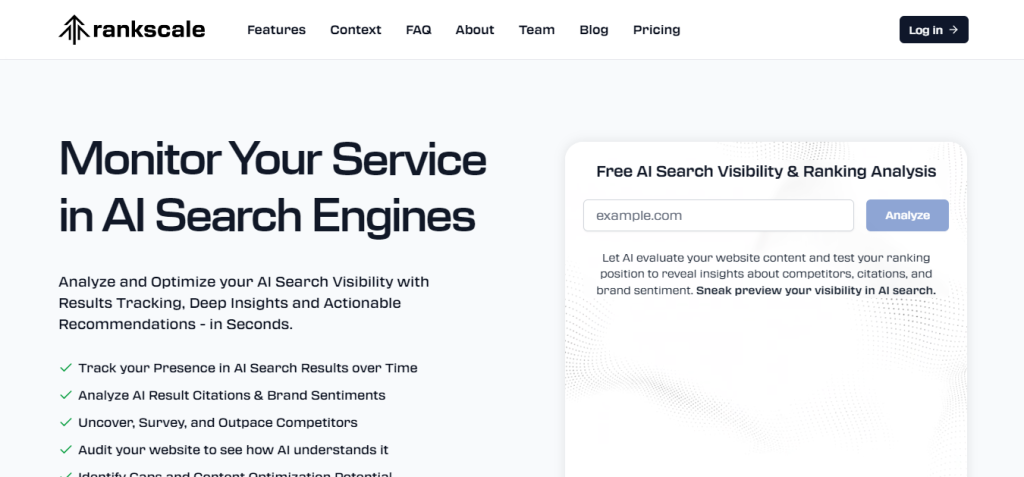
Best for: Budget‑conscious teams & daily monitoring
Price: Affordable plans starting from low‑tier pricing (e.g., ~$20+)
Rankscale AI offers daily tracking of brand presence and citations across leading AI platforms including ChatGPT, Perplexity, and Google AI Overviews. Its strength lies in frequent updates and accessible dashboards.
Why it’s useful:
- Low setup time
- Flexible prompt tracking
- Good for teams on a budget
5. Peec AI
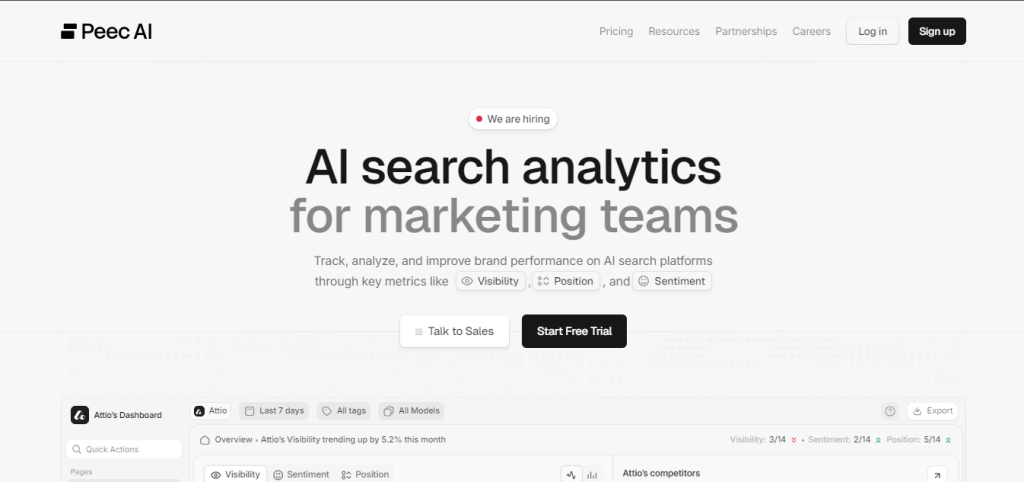
Best for: Multi‑engine AI tracking with intuitive dashboards
Price: Mid‑tier pricing (e.g., €99+)
Peec AI is purpose‑built for AI search visibility, tracking how your domain is referenced across ChatGPT, Google AI Overviews, Perplexity, and others. Its dashboards focus on mention patterns, cite frequency, and ranking across LLM surfaces.
Why it stands out:
- Deep multi‑engine support
- Useful insights for competitive comparison
- Focused metrics built for visibility tracking
6. Profound AI
Best for: Enterprise & advanced analysis
Price: Premium / custom plans
Profound AI provides rich dashboards for large brands or agencies, offering broad coverage across multiple AI platforms, share‑of‑voice analytics, and deep trend reporting. It’s ideal if your visibility strategy spans many regions, products, or AI engines.
Best suits:
- Large teams and complex catalogs
- Organizations needing API integration and multi‑region support
7. Surfer SEO
Best for: Content teams that want AI visibility tied to optimization
Price: Mid‑range (via Surfer subscription)
Surfer SEO added AI tracking capabilities that monitor mentions across generative answer engines and link those insights directly to your content planning workflows. It’s a visibility + optimization combo.
Why it’s worth considering:
- Ties AI visibility to content performance
- Great for integrated content teams
How to Choose the Best AI Search Visibility Checker for You
You don’t need all tools. Start with these questions:
- What stage are you at?
- Just curious? Start with a free AI search visibility checker like Fixmystore.
- Ready to invest? Pick one paid tool that fits your size (Fixmystore for shopify store, Ubersuggest for small, Semrush/Ahrefs for bigger).
- How technical is your team?
- Non-technical → Fixmystore, Ubersuggest, Peec, Mangools.
- Technical/SEO-heavy → Semrush, Ahrefs, Scrunch, Profound.
- What do you care about most?
- “Just tell me if I appear in AI answers” → Fixmystore, Mangools, Rankscale.
- “Help me fix my site so AI can quote me” → Otterly, Writesonic GEO.
- “I need full-funnel reporting & ROI proof” → Semrush, SE Ranking Visible.
For most Shopify or e‑commerce owners, a simple stack looks like this:
- Run a free AI search visibility checker (fixmystore.com) to see if AI engines notice you at all.
- Use a budget tool (Ubersuggest or Otterly) for a few months to fix obvious gaps.
- If AI becomes a major channel, upgrade later to Semrush or Ahrefs to go deeper.
Common Shopify Mistakes That Kill AI Visibility
- Focusing only on blogs, not product data
- Blocking AI crawlers in robots.txt
- Assuming SEO = AI visibility
- Skipping structured data
- Never tracking change over time
- Buying enterprise tools before validation
Each mistake costs visibility and often revenue.
Product Data That Matters
- Title with meaningful attributes (brand, function, key specs)
- Structured descriptions that mirror buying queries
- Schema markup for Product, Offer, and Ratings
- Accurate pricing and inventory
- High‑quality images
AI engines read this first – then use it to build recommendations.
Quick FAQs
Conclusion
Your Shopify store’s AI visibility gap is real, measurable, and fixable.
By understanding the new discovery pathways of AI search and acting with data‑driven steps, you can unlock a new channel of discovery – often before competitors even realize the problem exists.
👉Start with the free AI visibility checker at Fixmystore.com
Get your baseline in under 5 minutes – no credit card, no guesswork.