If you sell B2B across Europe on Shopify, EU VAT ID validation is mandatory – not optional.
In 2026, EU tax authorities expect Shopify merchants to validate VAT IDs in real time, apply reverse charge correctly, and maintain audit-ready records. Manual checks, admin-only validation, or post-purchase fixes no longer meet compliance standards.
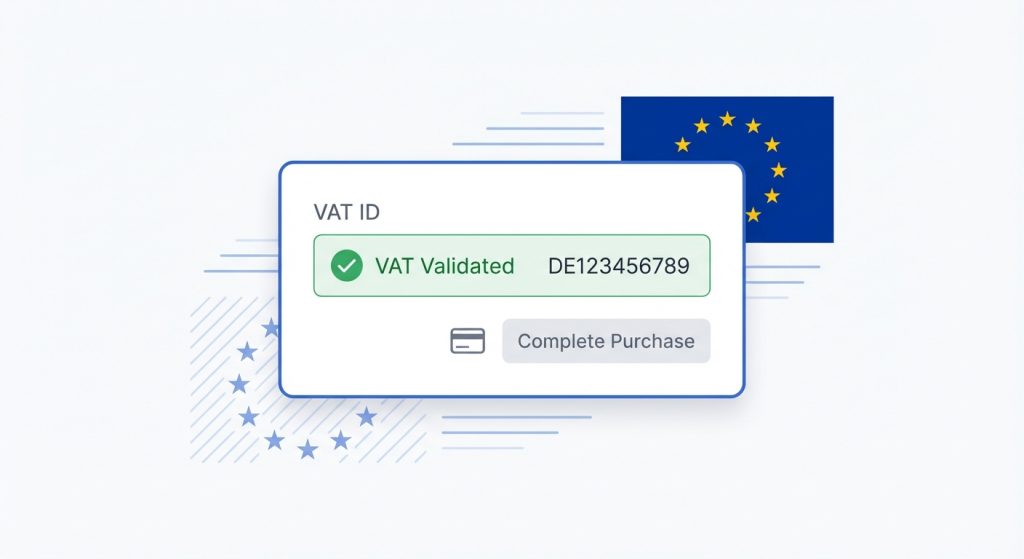
This guide explains:
- Why EU VAT validation matters legally and operationally
- What Shopify supports natively (and where it stops)
- All VAT validation methods compared
- How automated VAT validation works end-to-end
- A no-code setup you can complete in under 10 minutes
If you want compliant B2B checkouts without refunds, admin overhead, or audit risk, this guide is for you.
Why EU VAT ID Validation Matters in 2026
Under EU VAT law, reverse charge applies when:
- Both seller and buyer are VAT-registered
- They are located in different EU member states
- The buyer’s VAT ID is valid at the moment of sale
This means:
You must be able to prove that the VAT number was valid before payment was taken.
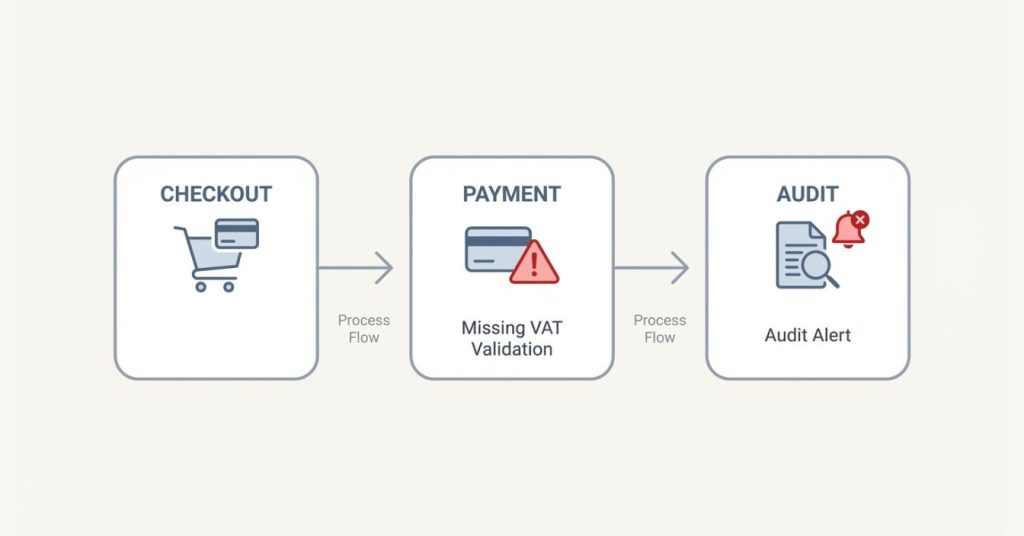
If validation is missing or happens after checkout:
- VAT may be charged incorrectly
- Refunds become unavoidable
- Audit trails are incomplete
- Liability shifts to the merchant
Many Shopify stores still validate VAT IDs:
- Manually via the VIES website
- Inside Shopify admin only
- Or not at all
That’s exactly where compliance issues begin.
The Hidden Cost of Manual VAT Validation
Manual VAT validation usually looks like this:
- Copy VAT ID from the order
- Paste into VIES
- Fix formatting issues
- Retry during VIES downtime
- Adjust taxes or issue refunds manually
At scale, this results in:
- Poor checkout experience for B2B buyers
- Delayed order processing
- Lost trust with EU customers
- 10+ hours of admin work per week
- Higher exposure during tax audits
Automation removes these issues by validating VAT IDs in seconds, directly at cart or checkout.
Not sure if your Shopify store is validating EU VAT IDs correctly today?
FixMyStore AI Audits, Shopify tax configuration, checkout logic, and B2B flows to uncover VAT validation issues before they turn into problems.
Shopify Native VAT Validation
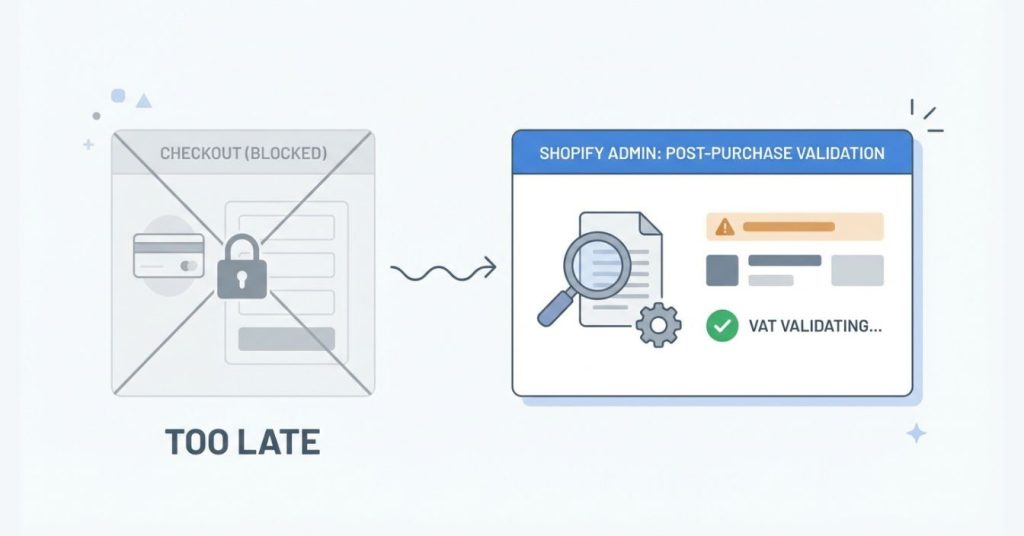
Shopify offers limited VAT validation through Shopify Tax.
What Shopify Tax Handles Well
- Validates VAT IDs via VIES inside admin
- Marks customers or companies as valid/invalid
- Supports reverse charge logic after purchase
Where Shopify Tax Falls Short
- No VAT field at checkout by default
- No real-time validation before payment
- No automatic tax removal at checkout
- No customer-facing error messages
- No checkout-level control for B2B UX
In short:
Shopify Tax is a back-office tool, not a checkout compliance solution.
For EU B2B stores, checkout-level validation is essential.
EU VAT Validation Methods Compared
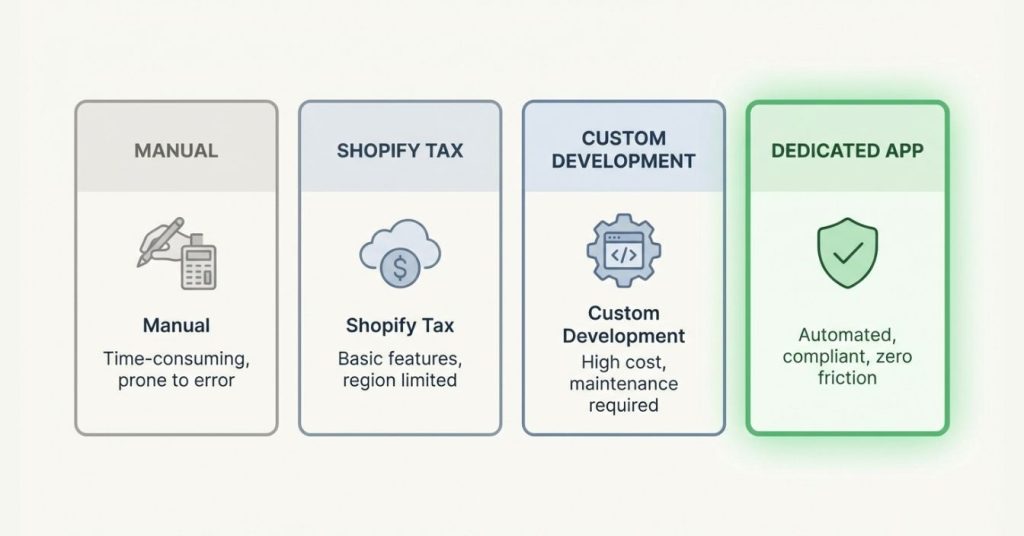
There are four realistic ways to validate EU VAT IDs on Shopify.
| Method | Best For | Setup Time | Cost | Automation |
|---|---|---|---|---|
| Manual VIES checks | Very low volume | None | Free | ❌ None |
| Shopify Tax | Admin records | Minutes | Included | ⚠️ Admin only |
| Custom checkout extensions | Dev teams | Hours–days | Dev cost | ✅ Full |
| Dedicated VAT app | Most B2B stores | <10 min | $8.89+/mo | ✅ Complete |
1. Manual VIES Validation
- Free but error-prone
- No checkout logic
- No audit logging
- Breaks immediately at scale
Only viable for very small stores.
2. Shopify Tax (Native)
- Useful for internal records
- Validates VAT IDs post-purchase
- Does not improve checkout UX
- Does not prevent incorrect charges
Works as a foundation, not a full solution.
3. Custom Checkout Extensions
- Add VAT fields via Checkout UI Extensions
- Call VIES APIs manually
- Store results in metafields
Downsides:
- Requires developers
- Ongoing maintenance
- Breaks with platform changes
- Overkill for most merchants
4. Dedicated VAT Validation Apps (Recommended)
Dedicated apps handle:
- VAT ID input fields
- Real-time VIES validation
- Automatic VAT exemption logic
- Multilingual UX
- Audit-ready logging
This is the fastest, safest option for most EU B2B stores.
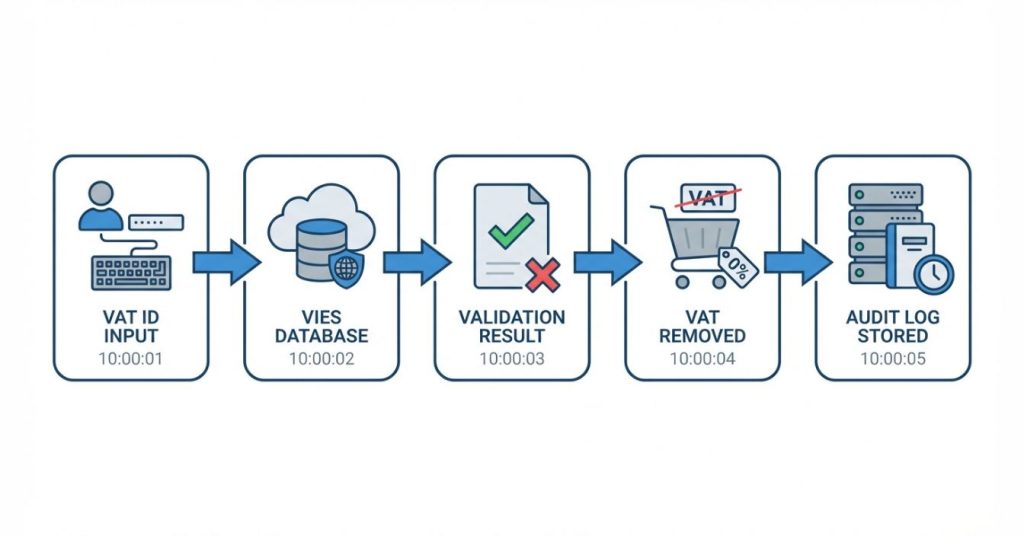
How Automated EU VAT Validation Works
A compliant automated flow works like this:
- Customer enters VAT ID (e.g., DE123456789)
- Input is sanitized and formatted
- System queries the VIES database
- VIES returns validity + company details
- Cross-border rules are checked
- VAT is removed before checkout
- Validation result is logged with timestamp
- VAT ID is stored in metafields for audits
If VIES is temporarily unavailable:
- Checkout continues with fallback logic
- Validation status is clearly recorded
This is the standard EU tax authorities expect in 2026.
EU VAT TAX EXEMPTION AUTOMATE
EU VAT TAX EXEMPTION AUTOMATE is built specifically for EU B2B VAT compliance on Shopify.
Why Merchants Choose It
- Real-time VIES validation at cart and checkout
- Automatic VAT exemption when rules apply
- Unlimited VAT checks
- Multilingual VAT labels (BTW, TVA, MwSt, IVA, etc.)
- Works on all Shopify plans
- Shopify Plus checkout support
- Clean B2B-friendly UX
It’s rated 5.0 for reliability and responsive setup support.
Pricing:
- Starter: $8.89/month – core validation & exemption
- Advanced: Expanded B2B logic
- Plus: $49/month – Shopify Plus checkout, custom forms
- 7-day free trial available
- Annual plans offer additional savings
Step-by-Step: No-Code Setup (Under 10 Minutes)
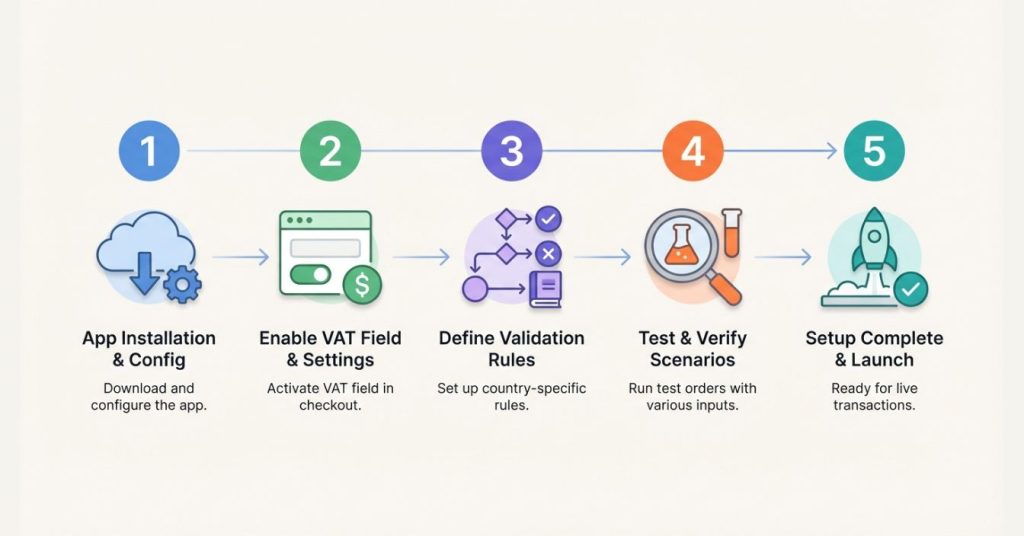
Step 1: Configure Taxes
Go to Settings → Taxes
- Enable EU markets
- Activate Shopify Tax
- Confirm cross-border rules
Step 2: Install the App
Search EU VAT TAX EXEMPTION AUTOMATE on the Shopify App Store
Approve access to customers, orders, and checkout.
Step 3: Add VAT Field
Enable:
- Cart VAT widget, or
- Checkout integration (Shopify Plus)
Step 4: Set Validation Rules
From the app dashboard:
- Enable real-time VIES validation
- Activate VAT exemption logic
- Turn on translations
Step 5: Test Thoroughly
- Valid VAT → tax removed
- Invalid VAT → clear error message
- Same-country VAT → tax applied
- VIES downtime → fallback works
Common EU VAT Validation Mistakes to Avoid
- Exempting VAT for same-country sales
- Validating VAT IDs after checkout
- Not logging validation results
- Relying only on admin-side tools
- Issuing refunds instead of fixing checkout logic
These are the first issues auditors identify.
Final Takeaway: VAT Validation Is the Foundation of EU B2B
EU VAT exemption only works when validation is:
- Real-time
- Logged
- Applied before payment
- Consistent across orders
Manual checks don’t scale.
Admin-only validation isn’t enough.
Automation is the only sustainable approach in 2026.
Dedicated solutions like EU VAT TAX EXEMPTION AUTOMATE exist because Shopify alone doesn’t handle EU B2B VAT at checkout level.
Want to Go Further?
VAT validation is only one part of running a compliant Shopify B2B store.
👉 Explore AI Audits at FixMyStore.com